What Should I Do If I’m Having Sensitive Teeth?
Key Takeaways:
- Tooth sensitivity affects millions and occurs when enamel wears down or gums recede
- Simple changes like using soft-bristled brushes and desensitizing toothpaste can significantly reduce discomfort
- Persistent sensitivity may indicate underlying dental issues requiring professional treatment
- Regular dental checkups are essential for preventing and managing tooth sensitivity
What This Blog Covers
- Common causes of tooth sensitivity
- Five practical ways to reduce discomfort at home
- Signs that indicate when professional dental care is necessary
- FAQs about tooth sensitivity
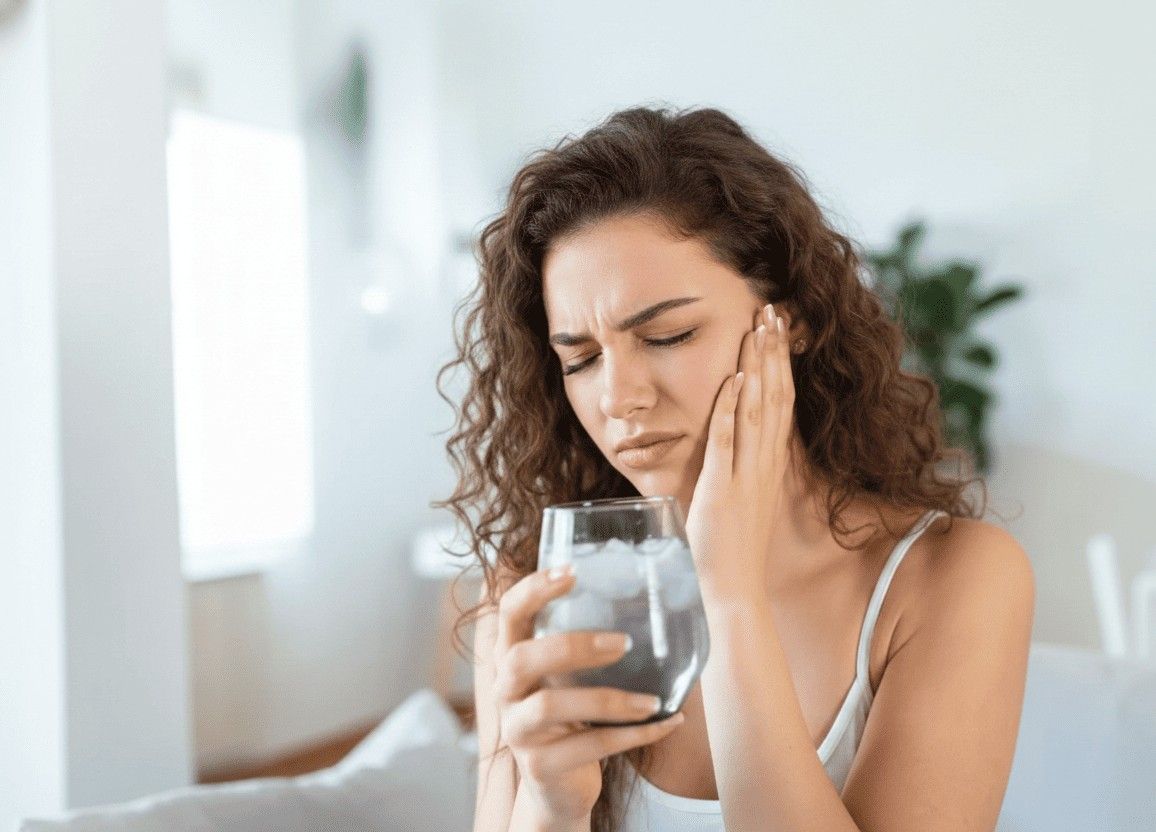
Do your teeth hurt when you eat ice cream, drink coffee, or brush? That sharp, sudden pain can turn everyday pleasures into uncomfortable experiences. Tooth sensitivity is a common dental issue that affects millions of people, but the good news is there are effective ways to prevent pain and protect your smile.
What Causes Tooth Sensitivity?
Tooth sensitivity happens when the protective enamel layer wears down or the gum tissue recedes, exposing the inner layers of the tooth where nerves are located. This exposure allows hot, cold, sweet, or acidic substances to reach the nerve endings, triggering that characteristic sharp pain.
Understanding the root causes can help you take preventive action:
Brushing too hard or using a hard-bristled toothbrush - Aggressive brushing gradually wears away enamel and can push gum tissue back, creating the perfect conditions for sensitivity.
Gum recession - As gums pull away from teeth, they expose the tooth root, which lacks the protective enamel covering found on the crown of the tooth.
Tooth decay or cavities - Untreated cavities create pathways for temperature and food particles to reach sensitive inner tooth structures.
Worn fillings or dental work - Over time, dental restorations can deteriorate, leaving gaps where nerves become exposed to external stimuli.
Grinding or clenching teeth (bruxism) - This unconscious habit wears down enamel over time, making teeth more vulnerable to sensitivity triggers.
5 Things You Can Do to Reduce Tooth Sensitivity
1. Use a Soft-Bristled Toothbrush
Gentle brushing protects your enamel and gums from unnecessary wear. Choose a toothbrush with soft bristles and use light, circular motions rather than harsh back-and-forth scrubbing. Your teeth will be just as clean without the damage.
2. Switch to Desensitizing Toothpaste
These specially formulated toothpastes contain compounds that help block nerve signals, reducing pain over time. For best results, use desensitizing toothpaste consistently for at least two weeks. Some people find relief even sooner.
3. Watch Your Diet
Limit acidic foods and drinks like citrus fruits, soda, and wine, which can erode enamel. When you do consume acidic items, rinse your mouth with water afterward and wait at least 30 minutes before brushing to avoid damaging softened enamel.
4. Avoid Teeth Grinding
If you grind or clench your teeth at night, ask your dentist about a custom mouthguard. This protective device prevents enamel wear while you sleep and can significantly reduce sensitivity caused by bruxism.
5. Don't Skip Regular Dental Checkups
Your dentist can detect early signs of enamel wear, cavities, or gum disease before they become major problems. Professional cleanings also remove plaque buildup that contributes to gum recession and sensitivity.
When to See a Dentist
Even if you try home remedies, persistent or severe tooth sensitivity should be evaluated by a dental professional. What seems like a minor annoyance could signal a more serious issue requiring treatment.
At Sparkle Smile Dental Care in Phoenix, AZ, we can:
- Identify the underlying cause of your sensitivity through comprehensive examination
- Recommend treatments such as fluoride varnishes, dental bonding, or other protective solutions
- Offer personalized guidance for long-term oral health and comfort
- Address any cavities, gum disease, or worn dental work contributing to your discomfort
FAQs
Q: How long does it take for desensitizing toothpaste to work?
A: Most people notice improvement within two weeks of consistent use, though some experience relief sooner. For best results, apply it twice daily.
Q: Is tooth sensitivity permanent?
A: Not necessarily. With proper care and treatment, many cases of tooth sensitivity can be significantly improved or resolved completely.
Q: Can whitening products cause sensitivity?
A: Yes, teeth whitening can temporarily increase sensitivity. If you experience this, take a break from whitening and use desensitizing toothpaste.
Q: Should I avoid cold foods and drinks entirely?
A: You don't have to avoid them forever. Focus on treating the underlying cause, and you'll likely be able to enjoy these items again comfortably.
Sparkle Smile Dental Care – Your Phoenix Dentist for Sensitive Teeth
Don't let tooth sensitivity interfere with your daily life. Our experienced team at Sparkle Smile Dental Care is here to help you enjoy your favorite foods and drinks without pain. We understand that tooth sensitivity can impact your quality of life, and we're committed to finding the right solution for your unique situation.
Ready to find relief? Call or text us at 623-600-4330 to schedule a consultation today!
Conclusion
Tooth sensitivity doesn't have to be a permanent part of your life. By understanding the causes, implementing simple preventive measures at home, and seeking professional care when needed, you can protect your enamel and reduce discomfort. Whether you need a routine checkup or specialized treatment for persistent sensitivity, Sparkle Smile Dental Care is here to help you achieve a healthier, more comfortable smile. Don't wait, take the first step toward relief today.
Most Read
Loading...